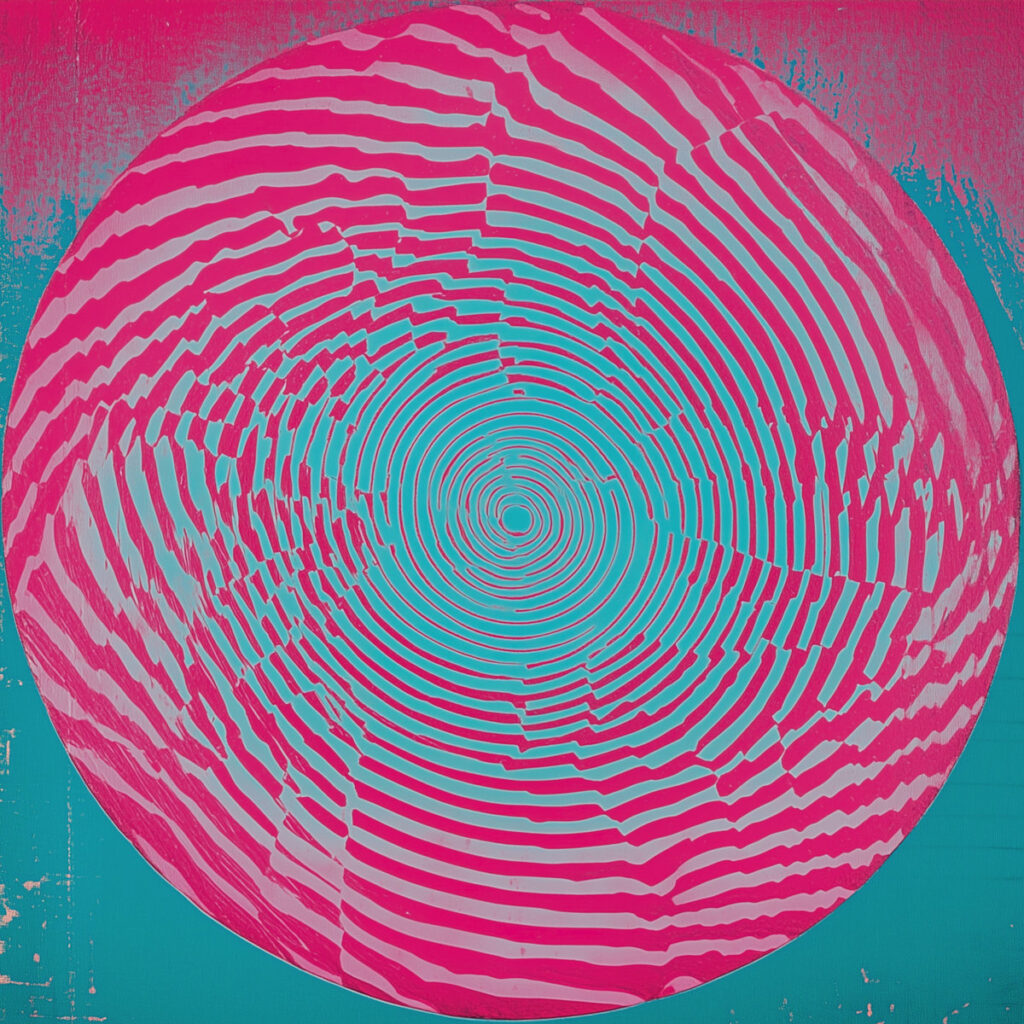
Intertapes is a growing collection of user-submitted, lost-and-found cassette tapes
https://intertapes.net/heraklion
This one is a super ragged halfway destroyed dance mix found in Crete.
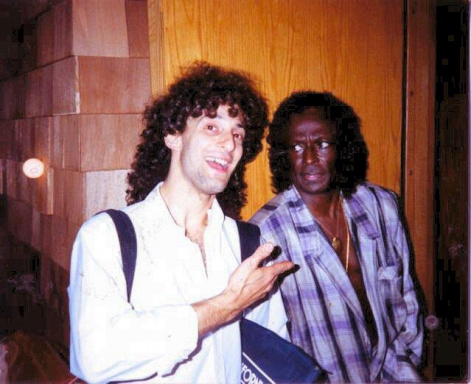
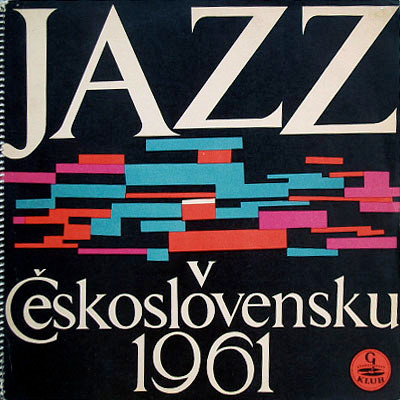
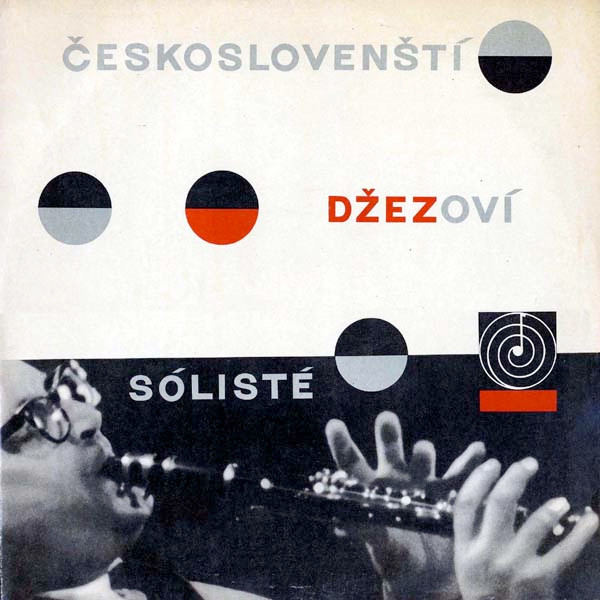
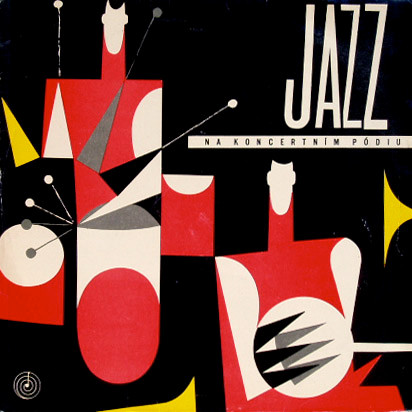
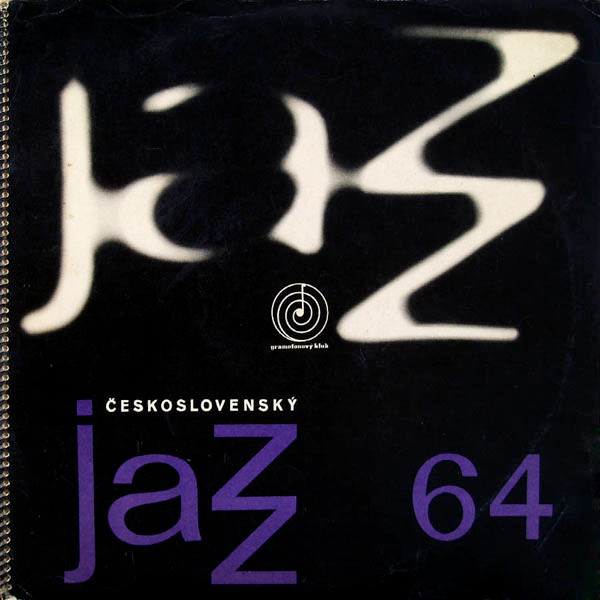
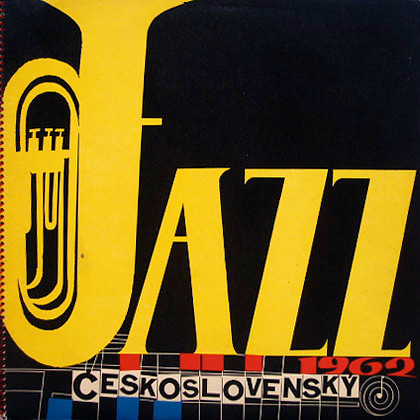
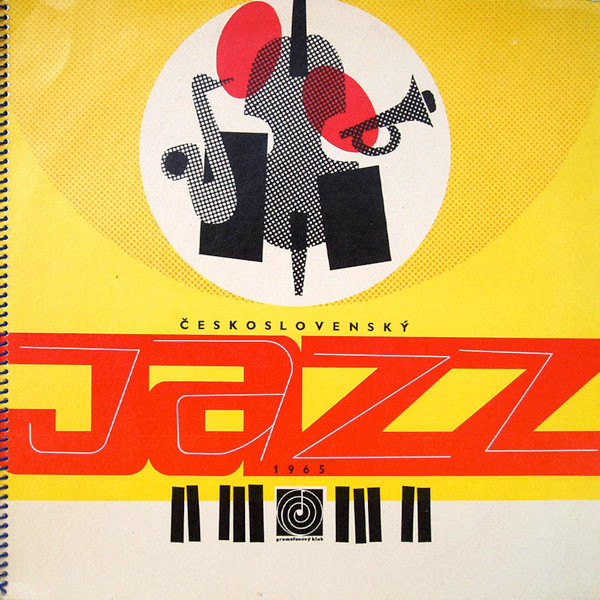
Československý Jazz
Found this series while researching Karel Velebny (1931-89) Czech band leader, vibraphonist, saxophonist, pianist, composer, actor, educator -- and composer of the soundtrack to the Weston Woods / Children's Circle classic short film Moon Man (1981).
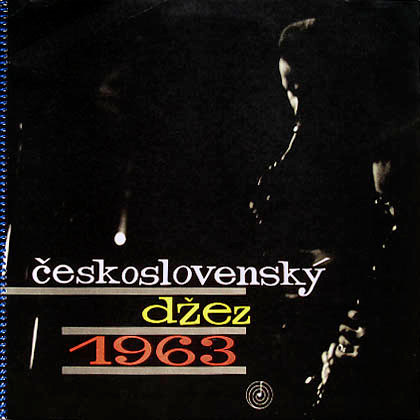
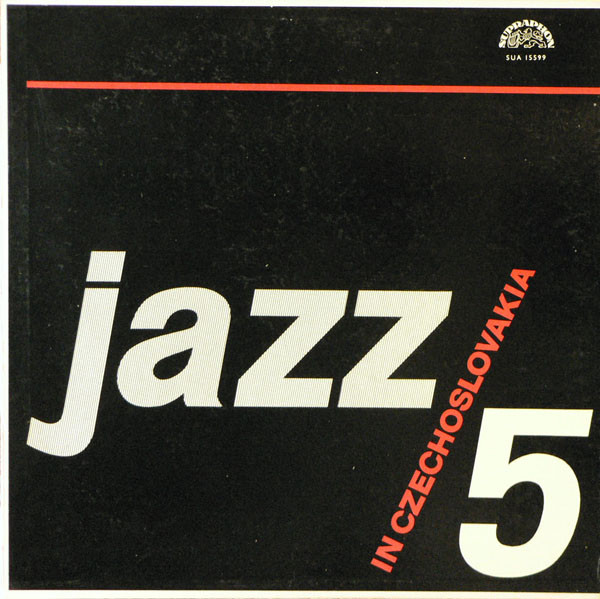
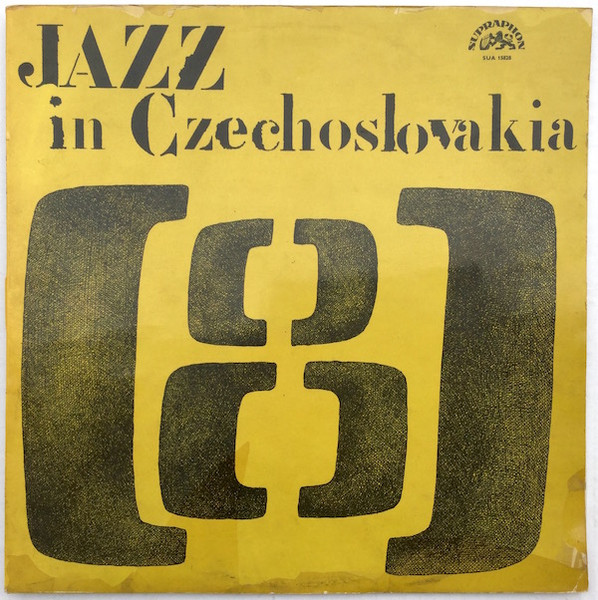
Československý Jazz was a Supraphon annual LP series released between 1960 and 1967. See also parallel export series for Artia: Jazz In Czechoslovakia.

Julian Sartorius & ET|ET - RLLRLRLLRRLRLRLRLLRLRLR
https://www.youtube.com/watch?v=hZ4HRiNTQC4
Minimal<Maximal<Machine<Mistakes
I missed this one! A fan of Julian Sartorius' peripatetic percussion recordings. The fifth member interrupts the automation, as a producer / engineer would, to sculpt the music, but tangibly rather than from behind the glass.
Naniwa Express - No Fuse (1982)
Not gonna send this to the non-bass players, but, yeah.
https://www.youtube.com/watch?v=jB6Ujoa6VRA
James Blackshaw - New Album 2023
https://jamesblackshaw.bandcamp.com/album/new-album-2023
--
I first heard "Running To The Ghost" sometime in 2007. Back then I worked doing data entry for music. Quaint! Seemed normal then, even if it had its perks. Though we now have streaming and all (Rdio RIP) my old job remains the best chance I ever had to hear wide swaths of interesting music. A lot can change in 15+ years. If not always for the better, then surely things only get more complicated.
We can be surrounded by music constantly, our choice, if we want to be. We hear it and it's then gone from immediate experience. Which for me makes live music all the more special.
Music is a gift. In the past when I heard people say that, I used to think they meant something like "you're so gifted, thank you for sharing your talent." Nevertheless, there's another aspect: the gift that professional musicians give to listeners (aside from years spent practicing) is actually traveling around. (A musician friend once called himself a professional driver, which is very true.) In exchange, a lot of musicians give up whatever stability and community that the rest of us take more or less for granted.
Musicians do have their fans. They're somewhere out there. You can't call them up or get on a group chat with them all. You can't really get them all together in the same place. Do they really exist?? Sometimes you wonder, in a "When I'm Sixty Four" sense. I've heard it said the opposite of doubt - isn't certainty - it's faith. Musicians would seem to need a lot of that these days when you consider the time and money involved in recording and releasing a new album, and the lack of interest by anyone else helping pay for it up front. Personally, as someone not big on faith, I'd rather go the DIY certainty route myself, and who cares about the rough edges. As in, buy some gear, and listen and learn to use it as you go. Either way. Regardless of approach, that doesn't diminish my next point.
Powerfully, the work that artists do, is sometimes not so much commoditizing their artifact -- the encaustic on the gallery wall, the sculptural metalwork, the premiere of their documentary -- but the dutiful and earnest documentation of their life's journey. Not so much in the sense of presenting an outlandish persona. Though that can be fun. More so, sharing consequential experiences. When that magic intersection happens, art / music / life is better for it. And hey, musicians, by all means sell some merch too. Just remember to give us listeners something to live by. For example:
"Running To The Ghost" was the track that drew me in with its hypnotic lushness. And over repeated listens it dawned on me that all this vast sound was coming from one guitar, one pair of hands, 6 pairs of strings, and it opened a possibility. And maybe a challenge? Further in, the meandering landscape of "Clouds Collapse" / "The Mirror Speaks" / "Stained Glass Windows" revealed to me a sensibility and pathos that took no captive prisoners of guitar traditionalists, of which there are many varieties, and in time I think I came to appreciate that even more. And with that pathos, it's evident that this music came from a person with strong experiences, and the music's form followed the need to express that.
Thank goodness, James Blackshaw again opens up another way. Fahey's certainly here. So is the open ended templates provided by the likes of Can and Bo Diddley. To my ears, so are the tears and blood of the Child Ballads. I am at this point the type of grumpy person that if I hear yet another sloppy blues turnaround I'm going to publicly lose all polite decorum, so for this listener the source aquifer has to go much, much deeper than the dried up Woodstock mudpit of mainstream guitar. A music that honors its ancestors and destroys its idols is bound to reward my attention, and if you've gotten this far, yours too.
Nostalgia Remasterd by Kamlak Bmbo
https://kamlakbmbo.bandcamp.com/album/nostalgia-remasterd
Memory can be fascinating for the curious. We keep around old photos of events we deem significant, or that capture a feeling we’d like to remember. We apply filters to give our recent photos an impressionistic or timeless sheen.
Despite our best efforts to solidify our version of events, memory remains fluid. Not just because we forget stuff, which we all do, constantly. Trivial: grocery lists, emails we didn’t read, stuff we left under furniture; and significant: life events, health and safety, functional knowledge. I myself am probably among the worst at recording my actual life, and I think it’s because I suspect deep down, my version of events will probably change over time.
Old friends can disagree about the simplest facts about what happened long ago. In my experience, discovering subjective truth has been more life-changing than preserving memories.
But what happens when a new thing, say… music, gives you a feeling of nostalgia, and prompts you to re-examine a forgotten moment? Well, that might be even more interesting.
Listening to this little collection of tracks, I’m struck by how familiar the many various traditions and styles sound to my ears, and yet I wonder that I’ve ever heard anything quite like it. All the same they bring back very real memories.
"Coffee From Ethiopia (ቡና ከኢትዮጵያ)" is a standout, a neon sunset cruise through Addis. The tizita bassline weaves through Juno synths on the cassette player as woodsmoke and coffee drift by. Or did that never happen...?
"Nostalgia (ትዝታ)" is closer to the feeling of what could be described as the claustrophobia of memory, the shadow side of nostalgia, wherein we realize that there are some things that can never be reclaimed, can never be revisited.
This uncanniness is held up with the feeling that it plays as a soundtrack. If we're watching a movie, it's a slow motion grainy segment of a band playing in a small obscure venue. Lo-fi samples of hand percussion, background noises, and real sounding spaces contrast with the muffled direct-recorded keys that act as non-diegetic sound. We watch from a distance, and we are offered no illusion of being placed within the scene.
Music has always been a big place, but we only recently have seen how awe-inspiringly massive the world’s music is. Sun Ra streams back to back with Shakira on my home speakers and I love just about every minute of it. The world reverberates with music; it bounces back and forth between genres and across geography, overlapping and changing as it flows. And all this while we go about our lives, listening to the music and creating new memories.
Splitter.AI
Splitter in it's basic functionality as a Deezer Spleeter service
...
Isolating instruments from music is now possible using AI, and Splitter is based on Deezer's open source research project Spleeter to accomplish this.
Could see this being a quick tool for stem separation or vocal isolation.
Edit June, 2023 - Things have changed a lot since I logged this. Nowadays I'm using djay quite often, and most of the time isolating bass, vocals, or drums just works.
Plugins without demo versions
You can have a really nice looking and sounding YouTube tutorial of your effects plugin, but if you don't have a demo version, so I can see if it works with my system, if it sounds good on my mix, if it has decent CPU usage, you're probably not going to get the sale. Anyway..
JEFF PARKER & THE NEW BREAD Go away
https://www.youtube.com/watch?v=feX-SiCT1rE
"Is that a soprano?"
"Nope!"
In Each And Every One from Polar Bear
http://polarbearmusic.bandcamp.com/album/in-each-and-every-one
Drones. Grains. Textures. Jazz trio instrumentation. Gritty. Claustrophobic. Revelatory. Join me in the jacuzzi. Descend to ascend.